A couple of years ago, I traveled to Barcelona for a trip with two of my girlfriends. We were having the time of our lives exploring the city, enjoying new experiences, and dining on great food.
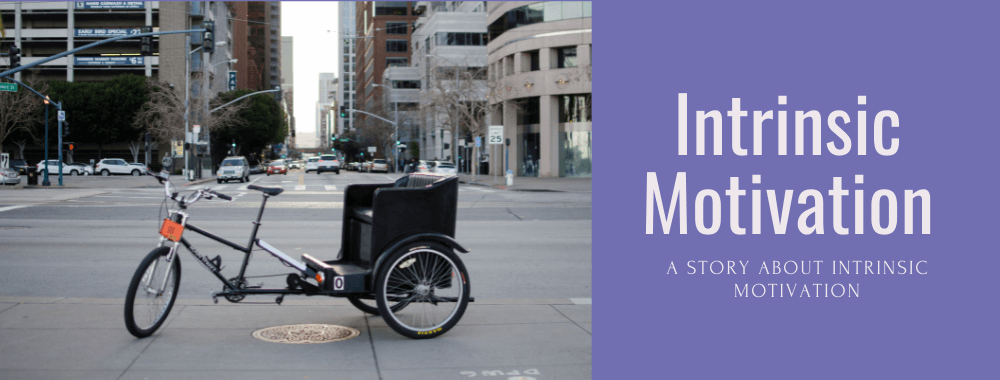
Unfortunately, I had packed the wrong shoes for walking around this beautiful city and by day three my feet were over it! I told my friends I didn’t care what mode of transportation passed us next, I was flagging it down and getting a ride back to the hotel. I turned around and here came Alex, with the biggest smile, pedaling a rickshaw.

I knew from experience that rickshaws weren’t the most cost effective means of transportation. In fact, Alex quoted a price that made me gasp, but I couldn’t walk another step, so we climbed aboard his rickshaw and away we went. I wasn’t prepared for the conversation that would follow.
Alex began asking us lots of questions…where were we from, what were we doing in Spain, how we liked Barcelona, and more. During the ten-minute ride, we learned that he was a sophomore at the local university. He LOVED being a rickshaw driver and had some big goals. He realized that if he got up an extra hour everyday to work, he could save enough money over the next semester to buy his own rickshaw and start his own company. He handed me his business card and it was clear he had created a marketing and business plan to get his company off the ground and make a living. His motivation as a young person was overwhelmingly refreshing and I began to wonder if he was born with some level of intrinsic motivation.
Intrinsic motivation is defined as engaging in a behavior because it is personally rewarding, not for an external award. Alex possessed five key components that had helped him realize measurable success over a short amount of time.
- Achievement drive – the personal drive to improve and achieve
- Commitment – the ability to set, and reach, goals
- Initiative – the willingness and readiness to act on opportunities
- Optimism – the gift of finding the silver lining, even after a set-back
- Resilience – the ability to adapt and overcome
The more I’ve studied the relationship between motivation and emotional intelligence, the more I’ve understood how we become motivated the most when we find activities that allow us to operate at an optimal “flow.”
Daniel Goleman, author of Working with Emotional Intelligence gives the example of “Joe.” Joe is someone who finds his work exhilarating and performs at his best. The key to exhilaration is not the task itself – Joe’s job is often routine – but the special state of mind Joe creates as he works, a state called “flow.” Flow moves people to do their best work, no matter what work they are doing.
Goleman isn’t the only expert in “flow.” Years ago, I meandered through a Barnes & Noble and found a book titled Flow. The psychology of the optimal experience.
In 1975, Dr. Mihaly Csikszentmihalyi defined flow as, “the state in which people are so involved in an activity that nothing else seems to matter; the experience itself is so enjoyable that people will do it even at a great cost, for the sheer sake of doing it.” Csikszentmihalyi said that psychologists who study happiness, life satisfaction and intrinsic motivation have found this definition helpful.
The idea of flow and intrinsic motivation fascinates me. The idea that someone like Alex was intrinsically motivated to start his own company at the age of 20 and put the desire into action is inspiring.
Recently, I asked a few friends these questions:
- What motivates you?
- When do you feel you are performing at an optimal level?
- What in your life do you take initiative on?
The range of answers was pretty cool…
- Creating solutions for customers
- When I am working on something really important for someone else
- Motivated by learning, growing and creating
- Having a goal, dream or vision
- To be the best in my profession
Emotional intelligence and motivation go hand-in-hand. If you get out of bed everyday but aren’t compelled to live your life with a sense of purpose, perhaps you need to ask yourself those three questions. I want to know what drives people, what makes them tick, what makes them want to give 110%. And I want that for you, too.
Motivation is what pushes us to achieve our goals, feel more fulfilled and improve overall quality of life. Without proper motivation, the quality of work is likely not at its full potential. Understanding what motivates you is a primary component in becoming more emotionally intelligent, but also in achieving success in life.
So, what’s motivating you today? Is it to return to school? Earn a promotion? Take a dream vacation? Pay off some debt?
In my keynotes, I talk about emotional intelligence and success in the workplace. From working with c-level executives in healthcare, middle managers in corporate America or students forging the start of their careers, I am passionate about helping people find their definition of success.