A few days ago, the U.S. Surgeon General reported a new epidemic that’s been tearing through our country — loneliness.
When we think about an epidemic, it’s often regarding widespread infectious diseases that ignite panic, cause casualties, and trigger governmental response.
But what the Surgeon General is calling an “under appreciated public health crisis” affects about half of all U.S. people. The alarmingly progressive cases of loneliness have not been previously dealt with at this level but continue to pose extreme and deadly health risks to all of us.
When I saw the recent headline, my heart immediately sank. Silently, I didn’t want to admit it. But, truthfully, have you (or anyone you know) felt “lonely” at any point in the last few years?
Yeah. Me too.
Mulling this over, I knew I needed to write about it. Connection and psychological safety have always been of the utmost importance to me, not just personally, but also professionally. In order to create the best workplaces in the world, our offices must foster an environment that allows every employee to feel connected, safe and included. And if we aren’t doing that, humans aren’t able to offer their best work.
Humans are wired for social connection, but we’ve become more isolated over time.
Social connection significantly improves the health and well-being of all individuals.
Social connection is vital to community health and success.
We all have a role to play in fostering social connection. So, what can you do to play your part personally or professionally?
How to Fight Loneliness in the Workplace
Foster a culture of inclusivity: Take uncharted measures to ensure each team member feels welcomed, valued, and heard. Create lines for open communication and aspire for diverse perspectives.
Create socially interactive opportunities: Provide ways for team members to socialize and connect beyond work-related tasks. This may include team-building activities, happy hours, volunteer days, and other creative activities.
Take the time to celebrate: Recognizing and celebrating the accomplishments of teams and individuals show that even small wins count and have a big effect in the larger picture.
Provide support for mental health: Offer resources and other means of support for team members who may be struggling with mental health issues. This can include access to mental health professionals, employee assistance programs, or other resources.
Prioritize empathy: By showing empathy for team members who may be struggling at work or beyond. Simply listening is the first step in showing care and support.
Loneliness is the Latest Epidemic
How to Fight Loneliness in Your Personal Life
Don’t wait, reach out: To overcome feelings of loneliness or help somebody who may harbor such feelings, it’s best to reach out instead of being reached out to for conversation. Even a few minutes of conversation can help people feel more connected.
Join a group or a club: Finding like-minded people in groups or clubs is a great way to synergize creative interests. Taking the step to join might provide the right opportunity to meet new people and make meaningful connections.
Practice self-care: Self-care takes many forms both physically and mentally. This may include exercise, eating well, sleeping long enough, and practicing mindfulness. But the first step in successful self-care is allowing yourself to do it.
Seekprofessional help: If you’re struggling with persistent feelings of loneliness, isolationism, or depression, consider seeking help from a mental health care professional.
As always, I’m cheering you on. If you found this blog post helpful, please forward it on to anyone you think needs to hear it.
ABOUT THE AUTHOR
Shannon McKain is a motivational keynote speaker and a business consultant based in Dallas, TX. She has worked in almost all 50 states with audiences ranging from corporate executives to student leaders.
Looking for a keynote speaker or consultant who can speak on these issues with expertise? Let’s chat!
https://www.shannonmckain.com/wp-content/uploads/2023/05/Loneliness-is-the-Latest-Epidemic.png3801000Shannon McKainhttps://www.shannonmckain.com/wp-content/uploads/2018/03/shannon-mckain-header-logo.pngShannon McKain2023-05-04 13:11:402023-05-04 15:58:06Loneliness is the Latest Epidemic
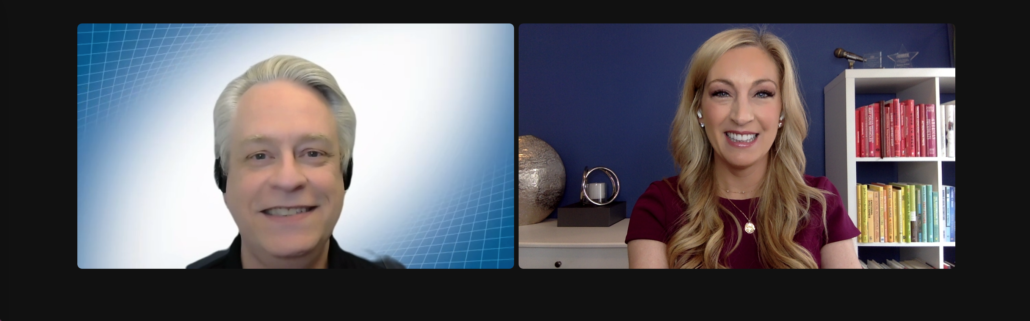
Recently Radio Host David Rancken from KRLD NewsRadio 1080 in Dallas contacted me about doing an interview on Workplace Culture trends in 2023. His questions and my answers follow.
David Rancken:
How’s the job market in your industry right now? This year started out with some of the lowest unemployment numbers in decades, and there seems to be no end in sight to the great resignation of 2022, but there are still a lot of issues dealing with the workspace these days. On today’s “Ask the Expert”, we are talking to Shannon McKain, a workplace culture expert as well as motivational speaker, and she is in the KRLD Zoom Room. Shannon, thank you so much for the time!
Shannon McKain:
David, thank you so much for having me back on KRLD again!
David Rancken:
When you’re giving out your talks, you talk about something called The Great Divide in the workplace. What is that?
Shannon McKain:
I’m so passionate about people having professional lives and personal lives that they absolutely love, and frankly, for most of us, we have to spend a fair amount of our time in the workplace. But unfortunately for the last decade or so, we have been so divided in so many key areas, I feel strongly that we are focusing too much on those divides and not enough on what actually brings us together.
David Rancken:
And the whole thing is this divide that you speak of. It’s not just in the workplace. It’s literally the entire nation is divided in some fashion. What is it about people that makes us so divisive?
Shannon McKain:
Golly, that could be a whole segment in and of itself, but I think particularly today, we are just so riled up because we have so much information at our fingertips, and people are empowered now more than ever to be able to assert their opinions, feelings, or emotions about something. And that’s valid. People should be able to have that opportunity. However, we’re not doing it in constructive ways where we can still continue to be pulled together on issues, especially when it comes to workplace culture.
David Rancken:
What do you see are the biggest workplace culture trends into 2023? As we are really just into the birth of this new year.
Shannon McKain:
We’ve been through so much in the last three years. Because of that, I think today we’re seeing more burnout, fatigue, confusion, anxiety, and more mental health issues than ever before. So I think when you talk about the last three years and all we’ve experienced, essentially we disrupted the apple cart in every particular sense. Humans need stability. We really do need parameters to do our best work in life. So when all of that got disrupted these last three years, it’s leaving us with a lot of confusion coming out of it. We need to focus on creating workplace culture that not only provides structure, but is healthy for employees.
David Rancken:
One thing we had seen for the last couple of years has been given the nickname, the Great Resignation, where people found other jobs in other places, but that’s also getting followed by what they’re calling the Great Regret, where they look back and say, it’s not so great on the other side.
Shannon McKain:
The workplace issues we’re seeing today have really become a PhD level of how do we solve this equation. So yeah, I think employees are definitely saying, we want something different but we aren’t necessarily finding what we need.
David Rancken:
It really isn’t. And they didn’t know what to expect when they went into the great unknown of the new company. And what they did end up losing was any seniority they had at their old place. And they might be finding this company that I just joined, I might be making a little more money, but is that extra money worth it?
Shannon McKain:
Yeah, absolutely. And in the 20+ years that I’ve been really analyzing workplace culture and issues, people think that they are motivated by money, but really at the end of the day, we are motivated by so many other facets.
For example, right now we are seeing younger millennials and particularly Gen Z not being motivated in the traditional senses whatsoever, whereas career trajectory, hierarchy, getting promotions, or the fear of being laid off, aren’t even on Gen Z’s radar right now. They’re motivated in completely different ways.
David Rancken:
But they haven’t seen what it’s like on the other side when unemployment numbers up upwards of 12, 13, even upwards of 20% in previous decades.
Shannon McKain:
Yeah, absolutely. And I think this next year we are still looking at a lot of uncertainty, especially with a pending recession and the layoffs that we are currently seeing and will potentially see here within the next few months.
David Rancken:
And a lot of people had you talk about layoffs, a lot of people had interest in getting into the tech sector because it seemed like it’s a lot of fun in all the perks that Google and Facebook were providing, and the layoffs are really hitting the tech sector very hard at this point.
Shannon McKain:
Yeah, if you jump on LinkedIn on any given day, you see announcement after announcement of another layoff. And frankly, I don’t think that that’s doing anything for our mental health either.
David Rancken:
Let’s talk about LinkedIn for just a second. You brought it up. That gives younger employees a chance to find new work, something that older employees really never had before. In the old days, they had to stick and look through the want ads and on and through networking and everything else. How big of a sea change has LinkedIn been?
Shannon McKain:
I’ve watched LinkedIn from its inception. It’s been another great tool to not only leverage our networks, but also communicate professionally. I wish younger generations would understand that and leverage it to its fullest potential. The way we communicate, write, and put our information out there is being utilized in really great ways on LinkedIn right now.
David Rancken:
What are people missing out in not using LinkedIn?
Shannon McKain:
Constantly reevaluating our profiles, updating them, thinking about how can we promote ourselves. The idea of a personal brand and self-promotion is a very real thing. Gary Vanerchuk talks a lot about day trading our time as currency right now. Everybody’s constantly trying to stay relevant and stay in front of other people. LinkedIn is no different for your personal brand.
You have to continually think about what do I need to add to my brand? What do I need to communicate and put out there professionally? And then also being able to communicate with others and really have a discussion or a dialogue. Contributing to different conversations across the platform or following different hashtags, or again, just keeping people up to date with what you’re doing.
David Rancken:
That’s got to be tough for older workers that don’t necessarily know how to use LinkedIn properly, what steps would you tell someone that is an older person that hasn’t necessarily used it?
Shannon McKain:
I think the first thing you can do is think of Google as your best friend. You can Google and research anything today. So if you have a question about how to get started on LinkedIn, I’m sure that there’s 25 different videos on YouTube or Google to teach you how to do that.
But from a fundamental standpoint, think about how you have your physical real estate, say your home, your apartment, your townhome, wherever i you live, but also think about your digital real estate and being able to put all of your information professionally in one place that everyone can find it. So recruiters can search for you, that you’re using the right keywords and metrics to be able to say, okay, who I want to connect with professionally. And then also just being able to create status updates and just saying, Hey, here’s going on with me week-to-week or day-to-day.
David Rancken:
I guess that’s, it’s basically turning yourself, as you said, into your own brand that has to get the message out there about what it is you are and what it is you do, and how do you get that message out to followers and how do you find those followers?
Shannon McKain:
There’s a fella by the name of Richard Bliss doing a lot of education right now around the proper ways to use LinkedIn and how to optimize getting your information out there and what your reach is. Just with anything else online right now, we’re subjected to the algorithms that the parent companies want us to adhere to. It can be very cumbersome for listeners right now. I don’t want to get too into the weeds on that particularly, but just thinking about professionally, how do you write and articulate a couple of important sentences about what’s going on with you and where you’re at in your career? And then of course, engaging and connecting with folks, it’ll just continue to build a bigger reach.
David Rancken:
We were talking earlier about Gen Z and younger millennials. They don’t seem to have the same attitudes towards a workplace as older workers.
Shannon McKain:
Absolutely not. As a keynote speaker, I talk about all areas of workplace culture and workplace issues. And one of the key areas is different generations and how they are motivated, how they communicate, and what they value. Particularly with Gen Z right now, we’re not seeing them motivated in the traditional ways whatsoever.
Historically, generations were very motivated by terms of seniority, hierarchy, and working their way up the corporate ladder. But Gen Z is just simply not wanting to do that. They see that as a very stressful move, and they’re willing to forego the extra income or the additional perks of getting into middle management or climbing the ladder for what they perceive to be a better work-life balance, maybe perhaps being able to have more flexibility and just staying where they’re at. And they’re also not motivated at all by the fear of being terminated. So when you look at the psychology of this generation, we have to tackle it in a completely different way than we have with any other generation.
David Rancken:
But how does that affect the companies themselves as they’re looking to replace workers and they’re finding out that the workers that they’re hiring don’t care if they’re there or not?
Shannon McKain:
So the biggest component for management and employers is to first understand to achieve excellent workplace culture, they have to understand the psychology of employees. Then they can address how to meet employees needs. For example, right now we’re seeing that the number one motivating factor, across the board, in every area of employment is that employees just simply want to feel safe. They want to feel psychologically safe; they want to feel like they can speak up or contribute without the fear of being reprimanded. And they want to understand that their employer trusts them, especially when we’re still working in a hybrid environment and don’t really want to work the traditional nine-to-five anymore.
And so employees want their employers to be able to trust them that they’re going to get the work done and they’re being productive, even if it’s not at the right place or the right time, nine to five, if that makes sense.
David Rancken:
Yeah, it does make sense. And you talk about other issues because we, we’ve seen it in school districts, we’ve seen it in other offices. A lot of companies are looking to stand out among possible job applicants, and one of those involves something like a four-day workweek. Is that going to become more normal in the near future?
Shannon McKain:
It’s a very interesting climate that we’re looking at right now. The four-day work week that we’re seeing, as you had mentioned in education and also in corporate America. That’s kind of a two-part thing that we’re seeing right now. One in part because of labor shortages and education in schools across America, we’re just simply not seeing teachers wanting to come to work and teach. And so that’s been a really huge issue. We’re seeing that in terms of labor shortages, but then we’re also seeing it in terms of the demand of the psychological needs of workers today.
What people don’t remember or understand or maybe have forgotten that the five-day workplace hasn’t always been that way. In fact, it didn’t actually get implemented in corporate America until 1926 when Ford Motor Company actually adopted that particular work schedule.
Prior to 1926, we were looking at labor as very strenuous and hard labor types of careers and jobs, and the expectation was that workers had to work six to seven days a week, even 10, 12, 14+ hours a day. And then in 1926, Ford Motor Company said, I don’t think that this is where the future of work needs to go. And they implemented this five-day work week, nine to five, and everybody gasped and said, oh my gosh, this is crazy. But it worked and productivity went through the roof. We did that for a century, and now we’re seeing the apple cart gets turned upside down again. I think it’ll be really interesting to see what happens in these next couple of years with the four-day work week.
David Rancken:
Do you see companies looking towards older workers to take on some of these jobs that the Gen Z and millennials might not. Or are older workers kind of being left out in this great surge of hiring?
Shannon McKain:
I think older generations are certainly at a crossroads right now trying to understand their place in navigating all of this. I think in general; employees are being asked to do all different kinds of tasks that are putting them outside of their comfort zones. Older generations need to ask themselves what they have to do in order to continue their career until they can successfully retire.
David Rancken:
One of the phrases that came out, and this will probably be the last question we talk about, is the phrase that came out in the last year was the phrase quiet quitting, where people decided, I’m going to do my job to the best of my ability. I’m not taking on anything extra. Is that still the case? Or companies saying, okay, just do your job and we’ll hang on to you?
Shannon McKain:
We have all these fancy terms that we’re coming up with these days. I think if you really look at the evolution of the workplace in general, you’re always going to have those workers that want to continue to push and do everything to impress their managers. And then you’re also going to have the workers that are going to say, this is what I was hired to do, so, therefore, I’m going to get that done and then go home.
So from a “Quiet Quitting” standpoint, companies are just trying to do whatever they can right now to make things be successful. At the end of the day, I think we all need to ask ourselves, what are we doing to meet in the middle to be able to make our workplace culture more productive and successful?
David Rancken:
Shannon McKain is a workplace culture expert and motivational speaker. You can find her at www.shannonmckain.com on today’s ask the expert. Shannon, thank you.
Shannon McKain:
Thank you so much, David, and I hope this helps your listeners today!
About The Author
Shannon McKain is a motivational keynote speaker and a business consultant based in Dallas, TX. She has worked in almost all 50 states with audiences ranging from corporate executives to student leaders.
Looking for a keynote speaker or consultant who can speak on these issues with expertise? Let’s chat!
https://www.shannonmckain.com/wp-content/uploads/2023/02/Workplace-Culture-in-2023.png450800Shannon McKainhttps://www.shannonmckain.com/wp-content/uploads/2018/03/shannon-mckain-header-logo.pngShannon McKain2023-02-23 14:33:302023-02-23 14:33:33Workplace Culture Issues in 2023