Tag Archive for: emotional intelligence

2025 Recap: Did you master your mindset & Rally forward?

There’s still time to turn Burnout into Breakthrough!


2025 was quite a year! We saw high energy in the first quarter, the usual mid-year slump, and a strong push to the finish. But through it all, the external pressures never eased. If anything, they felt even more intense this year. If you’ve felt burned out, you’re not alone—studies show that ongoing stress is changing how we think about employee well-being. Globally, professionals are reporting extreme levels of pressure, marking a critical tipping point in the battle for energy and focus. What really stood out this year wasn’t just the challenge, but how we responded. Many embraced my personal mantra of having a Rally Mentality and saw setbacks as a chance to regroup and come back stronger.

Having a Rally Mentality is my trademarked idea that every setback is just a halftime break, and champions are made during the comeback, not in the absence of pressure. Thousands chose to act instead of overthinking, learning to stop doubt in its tracks and tap into their own grit. The main lesson from my keynotes and articles this year is clear: you can master your mindset, rally forward, and turn pressure into performance. The goal is no longer passive survival but activating a mindset of resilience and perseverance to push forward despite moments of weakness.

The Burnout Battle and The Rally Reset: An Energy Crisis Reshaping Modern Work


The concept of burnout has shifted. It is no longer seen as a badge of honor to work long hours, but rather as a tactical problem rooted in unsustainable energy management. Throughout 2025, we covered strategies to make your performance sustainable, emphasizing that pushing harder is rarely the answer. Instead, the focus was on establishing micro-recovery tactics and aligning work with your body’s ultradian rhythms, not just the clock. The goal became to prevent the exhaustion that drains productivity.

My keynote, Rally Mentality, Master Your Mindset, taught leaders and teams alike that true resilience is a science-backed game plan, not just willpower. We learned to build psychological safety, ensuring that asking for a break is seen as part of the strategy, not a sign of weakness. If you felt stuck in that infamous half-year slump this past July, our blog provided the playbook, urging you to create your personal “rallying cry” and prioritize micro-wins. These small, deliberate actions prove that energy creates momentum, moving you out of neutral and back into drive.   

The Generational Divide in Workplace Stress

One of the most concerning trends we tracked in 2025 was the widening generational divide in stress and exhaustion. Burnout is hitting younger workers—specifically Gen Z (ages 18–27) and Millennials (ages 28–43)—harder than any other group. These generations are often grappling with the dual pressures of establishing their careers while navigating significant economic uncertainty, debt, and increasing caregiving responsibilities. The pressure is so acute that young workers (18–24-year-olds) are the most likely cohort to be absent from work due to stress-induced poor mental health.   

Crucially, this crisis is compounded by a breakdown in trust. The same highly stressed young workers show a sharp decline in the likelihood of opening up about stress levels with their managers. This emotional chasm creates a dangerous feedback loop: problems are concealed, stress intensifies, and the result is unplanned absence or turnover. This dynamic underscores why leaders must shift their approach—adopting a Rally Mentality that champions micro-
recovery and vulnerability to create the psychological safety young talent requires to thrive.   

Micro-Recovery: The Science of the Organized Comeback

The Rally Mentality™ is your secret weapon against this deep energy drain. It provides the mechanism to navigate the “midyear meh” that predictable slump, where initial enthusiasm wears off, and workloads ramp up. The core strategy for recovery and sustained success involves implementing Micro-Recovery techniques throughout the day.

This approach is founded on the principle that resilience is created in the organized comeback, not in the absence of pressure. Instead of waiting for large, sweeping changes or a mythical “magical morning” to reset, the framework focuses on generating deliberate momentum through small, consistent efforts known as micro-wins.

By consistently seeking and celebrating these tiny steps, professionals transform from merely surviving workplace pressures to thriving despite them, activating what behavior researchers’ term “response flexibility”—the capacity to pause, reflect, and choose a productive reaction to stress. The philosophy maintains that waiting to “feel inspired” is a losing strategy, and that the smallest possible action is inherently bigger than the biggest intention.

Bridging The Great Divide: EQ in a Multi-Generational Workplace

Generational friction, which I refer to as “The Great Divide,” emerged as a major theme this year, even though we’ve been talking about generational differences for years! With up to five distinct generations sharing the modern workplace, the emotional gap stemming from differences in communication, motivation, values, and technological comfort widened significantly.

My keynotes and particularly the November blog, challenged the notion that we need to “fit in.” Instead, we explored how to intentionally “fit together.” The core solution lies in heightened emotional intelligence (EQ). EQ is the essential skill set that transforms conflict into productivity by helping us recognize and manage emotions—both our own and those of others. Understanding why a Baby Boomer resists surprise feedback while a Gen Z expects real-time coaching allows us to build communication bridges rather than barriers.

By focusing on empathy and emotional maturity, you learned how to leverage those differences as strengths, fostering generational cohesion and improving retention. We discussed how strong leaders use an EQ-driven approach to navigate this landscape, proving that authentic human interaction is the ultimate competitive advantage.   

The Great Divide as a Critical Business Priority

Addressing this emotional friction is far more than a cultural initiative; it is a critical business priority with major implications for a company’s revenue and future. The conflict fueled by “The Great Divide”—stemming from poor management, misunderstandings, and a lack of growth clarity—is the root cause of high staff turnover and low employee engagement rates. When organizations become overwhelmed by this complexity, they risk falling into the trap of “analysis paralysis,” allowing the friction to deepen and turning what should be solvable internal battles into ongoing profit-and-loss crises. The Rally Mentality serves as the solution when organizational complexity leads to stagnation. It is the definitive decision to stop talking about problems and surge forward with focused, honest action.   

rally

EQ-Driven Strategies for Generational Cohesion

To successfully Master Your Mindset and Rally Forward in a multi-generational team, managers must treat internal conflict as a solvable, immediate problem that requires EQ-driven action. This requires strategic empathy:   

  1. Generational Code-Switching: High EQ allows leaders to “code-switch,” adapting their communication medium, timing, and motivational vernacular to fit the social context. This ensures every single age group feels seen, heard, and motivated by translating the organization’s overarching purpose in a way that resonates with their distinct value systems.   
  2. Shift from Annual Reviews to Real-Time Coaching: Implementing continuous, frequent feedback loops is vital for younger generations. Leaders use EQ to focus input on constructive, immediate “micro-wins” rather than waiting for annual reviews, which often arrive too late to course-correct behavior or celebrate momentum.   
  3. Institutionalize Transparent Progression: EQ drives empathy in defining clear career progression. This involves institutionalizing skills-first career programs that clearly map out upskilling opportunities and specific promotion metrics. This clarity provides the stability highly valued by Millennials or Gen Z for career progress and dramatically reduces the financial losses associated with staff turnover.

Rally

The EQ Advantage in an AI-Driven World: EQ 2.0

The rapid acceleration of generative AI throughout 2025 raised critical questions about the future of work. Our May blog affirmed a core truth: while AI can automate tasks, it cannot replicate trust, empathy, or relational leadership. This year cemented the idea that investing in “soft skills” is the real key to thriving in the age of automation. Organizational EQ is now a non-negotiable metric.

The power of intrinsic motivation, the internal drive to pursue a goal for personal satisfaction, was a highly requested topic, showing that leaders are moving away from relying purely on external rewards. When teams master your mindset and rally forward, they are motivated by meaning, not just money. We explored practical, science-based strategies to improve your team’s collective EQ, focusing on how to conduct a “Post-Game Analysis” after challenges to learn from setbacks rather than dwelling on failure.

This approach, integral to the Rally Mentality framework, is what allows teams to recover faster, lead stronger, and build an environment where peak performance becomes a learnable, repeatable skill for everyone.   

EQ 2.0: From Commendable Trait to Must-Have Skill

The transformation of the workplace in 2025 solidified Emotional Intelligence as the non-negotiable skill for agility and performance. EQ has moved from a commendable trait to a “must-have skill”—what is now being termed EQ 2.0—for the modern business world. Companies that prioritize Emotional Intelligence 2.0 will see higher employee engagement, better leadership, and subsequently, improved business results. The deep investment in developing empathy and self-regulation among leaders is no longer a luxury; it’s a foundational requirement for organizational health and innovation.   

The Hard Business Case: ROI of Empathy

Data overwhelmingly confirms that emotional intelligence is directly tied to measurable business outcomes. EQ accounts for approximately 58% of an individual’s job performance and predicts over 75% of job success. For leadership, this correlation is even stronger: 90% of top performers have high emotional intelligence.

The investment in EQ training delivers immediate and significant returns on investment, effectively removing it from the “soft skills” category and positioning it as a core financial and risk-management metric. This data establishes a clear causal relationship: EQ training yields better empathetic management, which leads to higher engagement and lower conflict, resulting in dramatically reduced turnover and increased profitability.

Furthermore, because high EQ fosters greater empathy and understanding, it enables individuals to resolve conflicts more effectively at work. Leaders who intentionally share lessons and acknowledge mistakes build the trust and psychological safety required for a scattered, hybrid team, directly addressing the deficit of trust observed in younger workers. This strategy transforms a source of stress into motivational energy.   

Managing Human Risk with EQ in the Age of AI

As the deployment of Artificial Intelligence (AI) accelerates, high EQ becomes crucial for managing the human risk involved. Empathetic leaders use EQ to communicate openly about technological changes, transforming employee fear regarding job security into motivational momentum and ensuring the workforce remains resilient and engaged amidst rapid change. Organizational EQ delivers three strategic must-haves for leading this complex workforce: financial retention, generational cohesion, and technological trust.


2025 Keynote Recap: Moments of Unstoppable Momentum and the Rally Mentality Playbook

My time on stage in 2025 was spent alongside thousands of phenomenal leaders and team members across 45 states. All were united by the common goal of achieving better results and better chemistry. The energy you brought to every event was infectious. Our most requested keynotes centered squarely on the action needed to overcome internal and external resistance:

  • Rally Mentality: Perform Under Pressure, Lead Through Adversity: Equipping leaders with mental toughness strategies forged from ultra-endurance racing principles. This presentation focused on making a conscious choice of grit and perseverance to Master Your Mindset, Rally Forward in high-stakes situations.   
  • Across the Great Divide: How to Make the Generations Play Nice Together: This presentation provided practical best practices for building cross-generational respect, communication, and cohesion, specifically addressing the need for leaders to “code-switch” their communication style.  

The key thread running through all these conversations was the importance of seeing self-doubt not as a personal flaw, but as a tactical challenge. As we discussed in October’s article, the five-step comeback system empowers you to diagnose the “opponent” (cognitive distortions) and systematically build a “Rally File” of documented evidence to counter self-doubt. You learned that the smallest possible action is already bigger than your biggest intention.   

The Seven-Point Rally-Up Strategy for 2026

All the challenges of 2025—burnout, generational friction, and the paralyzing effects of complexity—can be addressed by consistently executing the core tenets of the Rally Mentality. To transition from mere survival to sustainable success, professionals and leaders must adopt this systematic approach to recovery and forward motion:   

  1. Create Your Rallying Cry: This motivating catchphrase (e.g., “Finish Strong!”, “Watch Me Work!”) acts as your immediate inner coach. Place this mantra in visible locations—on your fridge, phone lock screen, or computer monitor—to hit the mental refresh button the moment energy dips.   
  2. Audit and Adjust: Glance backward to honestly assess which goals still matter and which ones can be trimmed without guilt. This crucial step allows you to update your playbook and eliminate “fluff,” ensuring your precious energy is focused only on the objectives that matter most.   
  3. Small Wins = Big Energy: Focus on the lowest hanging fruit—the five-minute tasks (a short call, tidying a drawer, replying to a difficult email). These micro-wins produce euphoria and help build a dopamine-driven win-streak, fundamentally training the brain’s reward system to seek more success.   
  4. Lock in a Micro-Routine: Power the rally with rhythm. Institute one strong morning habit or a powerful two-minute breathing reset, such as three deep breaths after every virtual meeting. Consistency in these small rituals, even if they seem minor, creates powerful, self-sustaining momentum.   
  5. Celebrate Loudly and Often: Progress parties must be mandatory. Acknowledge and celebrate small successes—getting up to stretch or successfully completing a tough task. Noticing success is how the brain is trained to create more of it, shifting your focus from failure to momentum.   
  6. Team Up for the Turnaround: Slumps “hate squads.” Rally with peers, coworkers, or accountability partners. Group challenges, daily check-ins, or coffee chats to share mini wins are transformative tools for maintaining motivational energy and ensuring nobody wallows alone.   
  7. Reconnect With Your Big Why: Revisit the core motivation for starting—the desire for more freedom, family time, or creativity. Framing daily activities through this ethical lens connects motivation with meaning, reinforcing the purpose of the effort and making temporary setbacks feel less impactful.

Looking Ahead to 2026: Your Call to Action

As 2025 closes and a new year begins, we stand at a powerful inflection point. The lessons of resilience, EQ, and action we learned this year are not meant to stay on the page or the stage. They are meant to be lived. 2026 is your chance to move beyond knowing what to do and into doing it.

It is the time to apply that Rally Mentality to your teams, your projects, and your personal goals. The competitive advantage will belong unequivocally to those individuals and organizations that successfully master energy and cultivate intentional, resilient momentum.   

I urge you to bring a meaningful change to your workplace or your career in the new year. Whether it is implementing a two-minute reset routine to fight fatigue, starting a “Rally File” to document your wins, or initiating an open, empathetic conversation with a colleague from a different generation, choose an action that demands energy and focus. The decision to Master Your Mindset, Rally Forward is a powerful, deliberate commitment. Don’t wait for permission or inspiration; start scrappy but start now. We are here to champion your second-half showdown. Your actions validate the power of the Rally Mentality framework in the real world.

We want to hear about the change you are bringing. What is your rallying cry for 2026? What bold, deliberate move are you making to enhance your team culture or your performance?

Tell us about it! Simply reply to this newsletter email, leave a comment on our blog, or find us on social media. Let’s make 2026 the year of consistent, unstoppable execution. 

Rally

📩 Get in touch: Shannon@ShannonMcKain.com 
🌐 Learn more: www.ShannonMcKain.com 
📱 Connect on LinkedIn: https://www.linkedin.com/in/shannonmckain/

AI won't replace Human Interactions

ABOUT THE AUTHOR
Shannon McKain is a motivational keynote speaker and a business consultant based in Dallas. She has worked in nearly all 50 states with audiences ranging from corporate executives to student leaders. Looking for a keynote speaker or consultant who can speak on these issues with expertise? Let’s chat! 

The Great Divide: Leading Five Generations in the Workplace

I. The Organizational Cost of The Great Divide

The workplace today is complex: rapid-changing technology, a mix of remote and office work, and up to five different age groups in collaboration. All these factors create a huge emotional gap in companies-what we call “The Great Divide”. This division makes mutual understanding difficult, hurts team chemistry, and ultimately stops organizations from reaching their goals. Addressing The Great Divide is not just about culture; it’s a critical business priority. Fixing this emotional barrier is not just about culture; it’s a critical business priority-one that has major implications for your revenue and the future of your company. (1)

When Cultural Friction Becomes a Balance Sheet Crisis

The emotional friction from The Great Divide causes immediate business problems. Recent research shows that average employee engagement rates are only around 33%. This low number signals wasted potential and productivity loss. When employees are mentally checked out, they are much more likely to quit. High staff turnover translates quickly into huge financial burdens. Replacing just one worker can cost from half to four times that employee’s annual salary. This cost includes clear expenses (hiring, training) and hidden “soft” costs, like the major time managers spend supporting the hiring process. (2)

For instance, replacing a mid-level employee earning $60,000 can cost the company over $180,000, factoring in lost company knowledge. High turnover is a critical profit-and-loss crisis. The conflict fueled by The Great Divide—stemming from poor management, misunderstandings and lack of growth—is the root cause. Investing in Emotional Intelligence (EQ) training and flexible leadership is therefore a high-impact strategy to protect the company’s financials.

The Rally Imperative: Action Over Analysis Paralysis

When organizations are overwhelmed by complexity, many freeze, trying to find the perfect action. It’s in this inertia that friction takes hold and allows The Great Divide to deepen. The solution is the Rally Mentality-your inner coach and motivational anthem. This is the decision to stop talking about problems and surge forward with focused, honest action. It requires energy and motion, realizing that resilience is created in the organized comeback.

By focusing on “micro-wins” rather than total fixes or “analysis paralysis,” leaders take ownership and create an unshakeable mindset. This mindset demands that managers treat internal battles, like generational conflict, as solvable problems that require immediate, EQ-driven action. (3)

The Great Divide

II. The Five-Generation Blueprint: Decoding Values and Non-Negotiables

Great leadership calls for an understanding of the intrinsic motivations, values and non-negotiable expectations within each of the five generations. This is a call for better understanding and adaptable Emotional Intelligence.

Foundational Generations: Traditionalists and Baby Boomers (The Duty Cohorts)

The oldest generations in the workplace prioritize duty and stability. Traditionalists (born 1925–1945) value dependability, loyalty, and respect. They are motivated by recognition that honors long-term commitment and prefer personal, tactful communication, sometimes handwritten. Their worldview values hierarchy and loyalty.

Baby Boomers (born 1946–1964) are optimistic, competitive, and workaholic, also prioritizing company loyalty. They believe success requires sacrifice and long hours. Baby Boomers are self-motivated, with salary and career excellence being key drivers. Critically, they dislike unsolicited feedback and may react poorly to negative input. Communication is typically efficient, favoring phone or face-to-face talks. (4) 

The Transition Generations: Gen X and Millennials (The Autonomy and Purpose Cohorts)

These groups value personal growth, flexibility, and organizational purpose. Generation X (born 1965–1980) is independent, skeptical, and flexible. They put work–life balance first and are interested in what benefits them, not just the company. Gen X get the message across effectively and to the point, and they will leave fast if their needs are not met by the employer. (5) 

Millennials (born 1981–1996) are currently the biggest group in the workforce. They look at work to include purpose, values, and transparency. Millennials need flexibility and lifelong learning. The most important thing to them is transparency about career advancement and how to grow with the company. They need a clear track or roadmap of career progression. Millennials need independence, mentorship, and cross-functional skill development. (6)


The Pivot Point: Generation Z in the Spotlight (The Transparency and Stability Cohort)

Gen Z, born 1997–2012, carries with it the highest modern demand for Emotional Intelligence. Non-Negotiable Expectations: The Gen Z population wants complete transparency and ethical leadership. They value emotional stability, meaning they ask for sustainable schedules and respect in regard to their well-being since they are the age group most likely to report mental health issues. 

Feedback Structure: Instead of traditional hierarchy, they prefer a collaborative structure. They want frequent constructive feedback instead of slow annual reviews. All input has to be easy to access via technological solutions, such as mobile-first systems and collaboration apps, if they are to be kept satisfied. (6)

The Inherent Workplace Conflict Demanding EQ

The generational blueprint shows one big contradiction. Boomers, raised on loyalty and duty, often resist surprise feedback. This inherent conflict is at the heart of The Great Divide in today’s workplaces. Gen Z, on the other hand, craves stability and expects real-time feedback, all the time. It’s no wonder universal systems fall short — they don’t meet people where they are.

That’s where Emotional Intelligence comes in. High EQ helps leaders read the room, adapt their approach, and communicate in a way that connects — not clashes. It’s about knowing when to “code-switch”, the practice of changing how you communicate to fit a different social context. By doing this, everyone feels seen, heard, and motivated.

Using the right tech can back this up. Mobile-first tools and AI can deliver personalized, in-the-moment feedback. But it still takes emotionally intelligent leaders to interpret what people really need — and then build strategies that deliver it.

The Great Divide

III. The EQ Edge: 7 Rally-Forward Strategies to Lead a Multi-Generational Workforce

Emotional Intelligence (or EQ) is a trainable leadership skill of strategic importance in managing people across generational lines. These seven strategies are actionable steps that show how leaders can use EQ to bridge The Great Divide and start your organizational rally to improve communication, relationships and productivity. 

1. Shift from Annual Reviews to Real-Time Coaching: EQ Focus: Social Skills & Self-Awareness

Annual performance reviews are passé for continuous development-seeking Millennials and Gen Z. Anxiety mounts as feedback is delayed, which hastens turnover. The Rally Action is to implement continuous, frequent feedback loops. 

Leaders will need to use EQ to focus this input on constructive, immediate “micro-wins.” Technology, using AI analysis, helps tailor personalized feedback, transforming performance management into sustained, real-time mentorship.

2. Institutionalize Transparent Progression: EQ Focus: Empathy & Internal Motivation

A major risk factor, especially among younger workers, is a lack of a clear path for advancement. Hazy promotion rules are seen as a leadership failure and a reason for talent to leave. Leaders have to show empathy and recognize that stagnation is a fear. 

The Rally Action: Drive skills-first career programs to clearly map lateral moves, upskilling opportunities, and the specific metrics needed for promotion. Millennials value transparency most when it comes to knowing where they stand regarding career progress. Clarity of policies, given early, provide stability to retain people. (7)

3. Lead by Modeling Vulnerability, Not Perfection: EQ Focus: Self-Regulation & Trust

Strict, top-down authority damages the trust Gen Z demands. Leaders must bridge this gap by showing humanity and self-awareness. The Rally Action dictates that leaders intentionally model vulnerability to build trust and psychological safety. This means openly sharing hard-won lessons and acknowledging mistakes, turning setbacks into chances for improved relationships. This requires high self-control. While a follower’s mistake is often forgiven, a leader’s inappropriate response, after claiming vulnerability, can devastate team trust, requiring competence alongside emotional transparency. (8)

The Great Divide


4. Learn the Art of Generational Code-Switching: EQ Focus: Social Skills & Empathy

Exacerbated by radically different generational norms, such as handwritten notes versus instant messaging, miscommunication is the root of The Great Divide.5 It means leaders need to employ EQ to enhance their capability to craft messages based on the recipient’s age group. 

The Rally Action is to practice “code-switching” actively. It means adapting the medium of communication-the phone call for a Boomer versus collaboration apps for Gen Z-and the motivational vernacular. Recognition for Traditionalists should be oriented to tenure; for Millennials, it should relate to purpose and skill development. This adaptive behavior causes a greatly reduced internal friction.

5. Turn Conflict into Cohesion: EQ Focus: Conflict Resolution & Self-Regulation

Work-style differences, especially friction around hybrid structures, are a leading cause of conflict. Emotionally intelligent leaders employ empathy and self-regulation to dampen tensions and create an inclusive environment. 

The Rally Action is a form of behavioral mediation: coaching employees to recognize the positive intent behind different work styles and using conflicts as opportunities to reinstate mutual respect. Once leaders understand the motivations underlying the behavior of each generation, misunderstandings can be turned into greater team cohesion.

6. Define and Celebrate Micro-Wins: EQ Focus: Momentum & Motivation

While facing complex challenges—such as integration of AI in systems-can, in fact, lead to organizational slowdowns. The Rally Action is to concentrate on small, intentional actions—micro-wins, as taught by the Rally Mentality. Defining those small wins with the help of their EQ and celebrating them authentically and frequently are a must for leaders. Such constant infusions of energy are explicitly appreciated by Millennials and Gen Z. Bonus–this approach provides the motivational momentum necessary for all generations to keep a long rally going. (9)

7. Define the ‘Why’ for Ethical Alignment: EQ Focus: Purpose & Empathy

Younger generations seek that their careers align with their values, and this requires ethical leadership and transparency. The Rally Action is to communicate the “why” in advance of decisions, while framing corporate strategy through an ethical lens. Leaders should connect the daily activities to the purpose of the company by using empathy, promoting wellbeing and recognizing that career development and mental health are interconnected. 

This focus on ethical alignment speaks directly to the socially conscious frame of mind of the younger, retention-critical groups.

The Great Divide

IV. EQ in the Age of AI: Converting Human Fear into Organizational Trust

The next great hurdle is the successful integration of Artificial Intelligence. Whereas AI could deliver an additional $13 trillion in global economic activity by 2030, this shift comes with huge uncertainty and distrust among workers. Emotional Intelligence is the critical tool for managing the human risks of this change. It serves as a crucial bridge over The Great Divide that AI integration can create. (10)

The Dual Challenge: Technical Governance Meets Human Uncertainty

AI governance platforms are designed as technical systems for managing compliance, ethics, and accountability in the use of AI. They protect against technical risks like algorithmic bias. 

However, at the same time, complex AI introduces a major layer of human risk. Employees are scared because this may mean job displacement, with repetitive roles becoming automated. 

Unless the leadership is empathetic, this uncertainty leads to organizational resistance and erosion of trust. Without efforts to manage human risk in parallel, technical risk mitigation cannot be successful. (11)

The Strategic Imperative: EQ as the Firewall Against Distrust

Emotional Intelligence is the essential firewall against organizational distrust. Open decision-making and explaining how AI works are vital for trust. Leaders must use high empathy to acknowledge employee fears and openly communicate the AI strategy, framing it as augmentation (making jobs better) rather than replacement. (12)

The Rally Action is for senior leadership to create a culture of open communication around AI use and actively develop internal policies and employee AI governance training. This effort shifts focus from managing the abstract regulatory risk of the algorithm to lessening the very real human risk of anxiety and resistance. By addressing uncertainty transparently, EQ leadership becomes a critical part of risk management and business continuity. (13)

The Rally Forward with AI: Elevating Human Skills

To maintain momentum, leaders need to paint a compelling vision in which human talent is augmented, not replaced. They have to explain that AI cannot replicate key human competencies such as Emotional Intelligence, creative thinking, complex negotiation, and highly adaptive social skills.  

The role of the manager is now fundamentally different. When AI performs routine analysis, the manager’s role becomes little more than an Emotional Steward-whose primary job is to maintain psychological safety, referee conflict, and put words to often-complex change that drives human-centric growth. Reframing EQ as the ultimate competitive advantage turns fear of obsolescence into motivational energy, positioning the organization to capture the economic uplift promised by AI adoption. 

The Great Divide

V. Summary and The Next Rally Action 

Leading a hybrid, multi-generational workforce augmented by AI is the defining test going into 2026. “The Great Divide” is the core barrier: the costly emotional gap from friction and uncertainty. Having a refreshed mindset-the Rally Mentality-driven by measurable, teachable Emotional Intelligence is the solution. 

The Rally Mentality enveloped with EQ delivers three strategic must-haves: 

  • Financial Retention: EQ directly reduces the high financial losses resulting from staff turnover by ensuring clear career prospects and regular coaching. 
  • Generational Cohesion: EQ bridges the demands of the five generations through “code-switching” and empathetic conflict resolution, turning friction into productivity.
  • Technological Trust: EQ manages the human risk of AI deployment through modeling vulnerability and communicating openly, changing employee fear into motivational energy. 

Your Turn: Start the Rally 

Don’t let team friction reach a state of crisis. Leaders can rally their teams right away by selecting one of these seven pragmatic EQ strategies and putting it into practice. Additionally, leaders who are looking for frameworks to translate this EQ Edge into measurable corporate performance can find specialized programs on how to define and defeat limitations in pursuit of higher success. Consider programs such as “Across the Great Divide” on building bridges across generations internally with employees or externally with client prospecting. Leaders willing to create an unshakeable attitude will find material focused on seizing deliberate action to move teams forward in a specific desired direction.

📩 Get in touch: Shannon@ShannonMcKain.com 
🌐 Learn more: www.ShannonMcKain.com 
📱 Connect on LinkedIn: https://www.linkedin.com/in/shannonmckain/

AI won't replace Human Interactions

ABOUT THE AUTHOR
Shannon McKain is a motivational keynote speaker and a business consultant based in Dallas. She has worked in nearly all 50 states with audiences ranging from corporate executives to student leaders. Looking for a keynote speaker or consultant who can speak on these issues with expertise? Let’s chat! 

Intrinsic Motivation

A couple of years ago, I traveled to Barcelona for a trip with two of my girlfriends. We were having the time of our lives exploring the city, enjoying new experiences, and dining on great food.

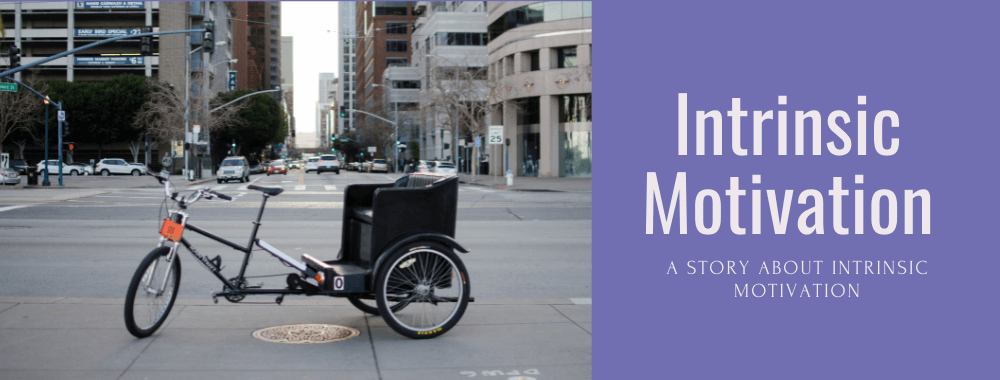
Unfortunately, I had packed the wrong shoes for walking around this beautiful city and by day three my feet were over it! I told my friends I didn’t care what mode of transportation passed us next, I was flagging it down and getting a ride back to the hotel. I turned around and here came Alex, with the biggest smile, pedaling a rickshaw.

I knew from experience that rickshaws weren’t the most cost effective means of transportation. In fact, Alex quoted a price that made me gasp, but I couldn’t walk another step, so we climbed aboard his rickshaw and away we went. I wasn’t prepared for the conversation that would follow.

Alex began asking us lots of questions…where were we from, what were we doing in Spain, how we liked Barcelona, and more. During the ten-minute ride, we learned that he was a sophomore at the local university. He LOVED being a rickshaw driver and had some big goals. He realized that if he got up an extra hour everyday to work, he could save enough money over the next semester to buy his own rickshaw and start his own company. He handed me his business card and it was clear he had created a marketing and business plan to get his company off the ground and make a living. His motivation as a young person was overwhelmingly refreshing and I began to wonder if he was born with some level of intrinsic motivation.

Intrinsic motivation is defined as engaging in a behavior because it is personally rewarding, not for an external award. Alex possessed five key components that had helped him realize measurable success over a short amount of time.

  • Achievement drive – the personal drive to improve and achieve
  • Commitment – the ability to set, and reach, goals
  • Initiative – the willingness and readiness to act on opportunities
  • Optimism – the gift of finding the silver lining, even after a set-back
  • Resilience – the ability to adapt and overcome

The more I’ve studied the relationship between motivation and emotional intelligence, the more I’ve understood how we become motivated the most when we find activities that allow us to operate at an optimal “flow.”

Daniel Goleman, author of Working with Emotional Intelligence gives the example of “Joe.” Joe is someone who finds his work exhilarating and performs at his best. The key to exhilaration is not the task itself – Joe’s job is often routine – but the special state of mind Joe creates as he works, a state called “flow.” Flow moves people to do their best work, no matter what work they are doing.

Goleman isn’t the only expert in “flow.” Years ago, I meandered through a Barnes & Noble and found a book titled Flow. The psychology of the optimal experience.

In 1975, Dr. Mihaly Csikszentmihalyi defined flow as, “the state in which people are so involved in an activity that nothing else seems to matter; the experience itself is so enjoyable that people will do it even at a great cost, for the sheer sake of doing it.” Csikszentmihalyi said that psychologists who study happiness, life satisfaction and intrinsic motivation have found this definition helpful.

The idea of flow and intrinsic motivation fascinates me. The idea that someone like Alex was intrinsically motivated to start his own company at the age of 20 and put the desire into action is inspiring.

Recently, I asked a few friends these questions:

  • What motivates you?
  • When do you feel you are performing at an optimal level?
  • What in your life do you take initiative on?

The range of answers was pretty cool…

  • Creating solutions for customers
  • When I am working on something really important for someone else
  • Motivated by learning, growing and creating
  • Having a goal, dream or vision
  • To be the best in my profession

Emotional intelligence and motivation go hand-in-hand. If you get out of bed everyday but aren’t compelled to live your life with a sense of purpose, perhaps you need to ask yourself those three questions. I want to know what drives people, what makes them tick, what makes them want to give 110%. And I want that for you, too.

Motivation is what pushes us to achieve our goals, feel more fulfilled and improve overall quality of life. Without proper motivation, the quality of work is likely not at its full potential. Understanding what motivates you is a primary component in becoming more emotionally intelligent, but also in achieving success in life.

So, what’s motivating you today? Is it to return to school? Earn a promotion? Take a dream vacation? Pay off some debt?

In my keynotes, I talk about emotional intelligence and success in the workplace. From working with c-level executives in healthcare, middle managers in corporate America or students forging the start of their careers, I am passionate about helping people find their definition of success.

Shannon is a motivational speaker based in Dallas, TX. She has worked in almost all 50 states with audiences ranging from corporate executives to student leaders.
What does Patrick Mahomes have to do with Emotional Intelligence?

What does Patrick Mahomes have to do with Emotional Intelligence?

I’ve been studying emotional intelligence for nearly two decades and the more I research, the more I realize no matter how “emotional” one is, we all have an opportunity to grow more “emotionally intelligent.” Recently I asked myself the question: What does Patrick Mahomes have to do with emotional intelligence? 

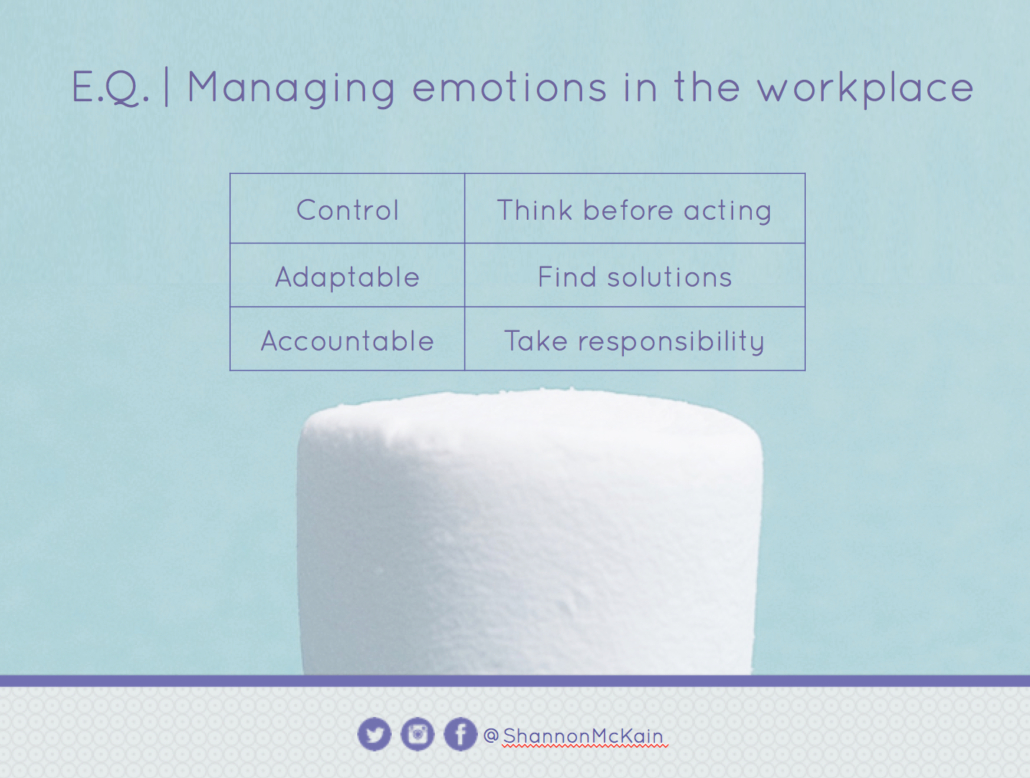
Specifically, a key factor to the EQ formula includes managing our emotions. It’s not enough to simply have awareness of our emotions. Being able to be in control emotionally is huge but can also be challenging. We are wired to feel emotion through the limbic system in our brain. The degree to which we experience emotions differs from person to person, but we all feel anger, stress, fear, and happiness. It’s how we respond to those emotions that are so important – critical, really – in affecting our interactions with others in the workplace.

Take Kansas City Chiefs 2nd year Quarterback Patrick Mahomes II; who is just 23 years old!  In the spotlight of Monday Night Football’s national stage, Mahomes performed on a level rarely seen in Kansas City let alone in the NFL.  Not only did he display exemplary skill, he also managed his emotions in a way, I believe, helped him lead the Chiefs to their fourth consecutive win!

There were several variables that a person lacking emotional intelligence would have allowed to affect their performance.  Flags disrupting the Chiefs offensive rhythm, the pressure of needing to overcome a ten point 4th quarter deficit, the deafening roar of the opposing fans at Denver’s Mile High Stadium and relentless pressure from the Bronco’s defense. But during all of it, I barely saw Mahomes get worked up. Instead, he was calm and collected for almost the entire game. That is a huge part of what emotional intelligence is – managing your emotions especially in challenging moments to still achieve your desired outcome.

During my years in corporate America, I found the same principle to ring true. It was much easier to become energized and remain positive about my job when working for someone who exhibited servant leadership and stayed calm, even when faced with difficult business decisions. These people made me want to work harder and do better, because my efforts were valued. Likewise, I’ve experienced projects that left me feeling emotionally drained and pessimistic when I worked for someone who couldn’t control his or her emotions and expressed extreme verbal frustration when I didn’t meet my goals. That’s a tough and toxic environment in which to work and ultimately caused me to change my circumstances (i.e. get a new job!).

The next time you are watching a sporting event, observe the leadership of the team or the coaching staff. How are they responding in the heat of the moment? How does that behavior affect the players and supporting coaches? One of my favorite recent articles about emotional intelligence in the sports world discusses the Philadelphia Eagles decision to hire an “emotionally intelligent” coach and the team’s success as a result of that hire.

Not a sports fan? That’s ok! You can make these same observations at work or school. Identify someone in a leadership position and take note of the way they respond to critical issues. Then, look at those around them. Are employees eager to please, because they respect the leader? Or, do they seem bent and broken from years of working under autocratic leadership?

With a few simple steps, we can all learn to manage our EQ and take our game to the next level.

  1. Take a day and focus on what triggers your emotions both positively and negatively. Use your senses. What smells, sounds, sight and the environment around you triggers you to react. Having awareness is the first key step.
  2. Knowing what those triggers are, identify 1-2 ways that will help you stay calm and collected before you react. Do you need to walk away from the situation? Do you need to write down your thoughts first?
  3. Think about these three key areas of managing your emotions: Control, Accountability and Adaptability.

Just like Patrick Mahomes II, we all have the ability to strengthen our EQ especially in intense moments. It’s the practice and education that makes us ready for them.

One of my most popular speaking topics is, “Emotional Intelligence in the Workplace: What’s your EIQ?” wherein I work with groups to discuss ways to identify, assess and control their own personalities and to work with the variety of personalities they encounter in the workplace. My Four Square approach will help everyone increase his or her social and emotional I.Q. Sound like this might be a good fit for your organization? Let’s talk!


What does Patrick Mahomes have to do with emotional intelligence

ABOUT THE AUTHOR

Shannon McKain is a motivational keynote speaker and a business consultant based in Dallas. She has worked in nearly all 50 states with audiences ranging from corporate executives to student leaders. Looking for a keynote speaker or consultant who can speak on these issues with expertise? Let’s chat!

Do you have this one key attribute?

I was recently leading a two-day workshop for the leaders of various divisions across a company. We were having a blast talking all things leadership, emotional intelligence, generational differences and personal development in the workplace.

I love having opportunities like this to spend so much time with corporate or student leadership teams, helping them grow and evolve!

As we started the self-awareness piece of the workshop, I asked all attendees to complete a personality test. Though I was certain everyone in the room had taken various tests throughout their careers, I wanted to focus on a different aspect for the purpose of our training. I handed each attendee a 40-question test and upon completion, we compiled the answers into four groupings of “personalities.”

As we looked at the attributes of the personality groups, nearly everyone nodded in agreement as they unveiled attributes that defined the group in which they felt like they belonged: “life of the party,” “analytical,” “inclusive,” “logical,” and so on.

Then, I changed the results from how the participant saw him or herself, to how others interpreted those personalities in the workplace. In one case, the HR Director saw herself as rational, firm on policy, and tough-minded. However, others in the office saw her as critical, ruthless, and lacking empathy. She was shocked to hear how she was perceived by her co-workers.

Being self-aware about our emotions isn’t just about knowing if we are happy or sad. It’s also about being aware of how our behaviors and emotions affect those with whom we interact. Understanding this could make all the difference in how successful our interactions are in the workplace.

It has been proven that people who are self-aware are able to achieve much more success because of this one key attribute.

If you are curious about ways to strengthen your self-awareness as it relates to personality and emotional intelligence, try this exercise:

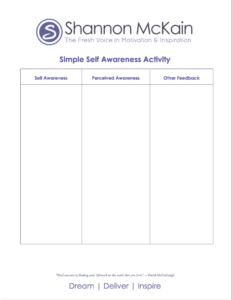
Download your own worksheet:  SelfAwarenessActivity

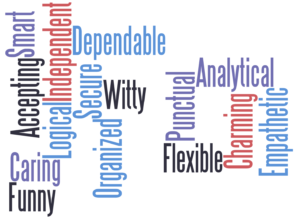
On a piece of paper, create three columns: self awareness, perceived awareness, and other’s feedback. Write down all of the attributes you believe to be true about yourself in the first column. In the middle column, create a list of how you think others see you. Remember, it’s important for us to understand how we are perceived by others! The final column may take some time but is so worth it! Find a few people whom you trust to provide candid and constructive feedback.

Here’s a sample email you could send to these people:

Hi! I am working on my goals and self-awareness. Would you consider providing honest and constructive feedback about these four questions? I have intentionally left them open-ended so you can provide answers in your own words. Thanks, in advance, for helping me become a better {peer, coworker, student, boss, etc.}.

In the workplace, please describe how you view me in these areas:

  • Personality: Do others see me as funny? Inclusive? Kind? Hard to work with? Easy going? Strict on deadlines? Overly emotional?
  • Work Product: How can I improve my work as part of the overall team/company success?
  • Strengths: What are my strengths and how can I better use them to contribute to our team?
  • Weaknesses: Are there things I do that may be perceived as a weakness or that may prevent me from being seen as a leader in the office?

I hope this exercise helps you become more self-aware and emotionally intelligent in all areas of your life. My goal is to create more cohesive teams and develop better leaders, and I believe that being emotionally intelligent about ourselves and those around us is key for optimal success!

Shannon is a motivational speaker based in Dallas, TX. She has worked in almost all 50 states with audiences ranging from corporate executives to student leaders.
Advancing Your Career After a Break

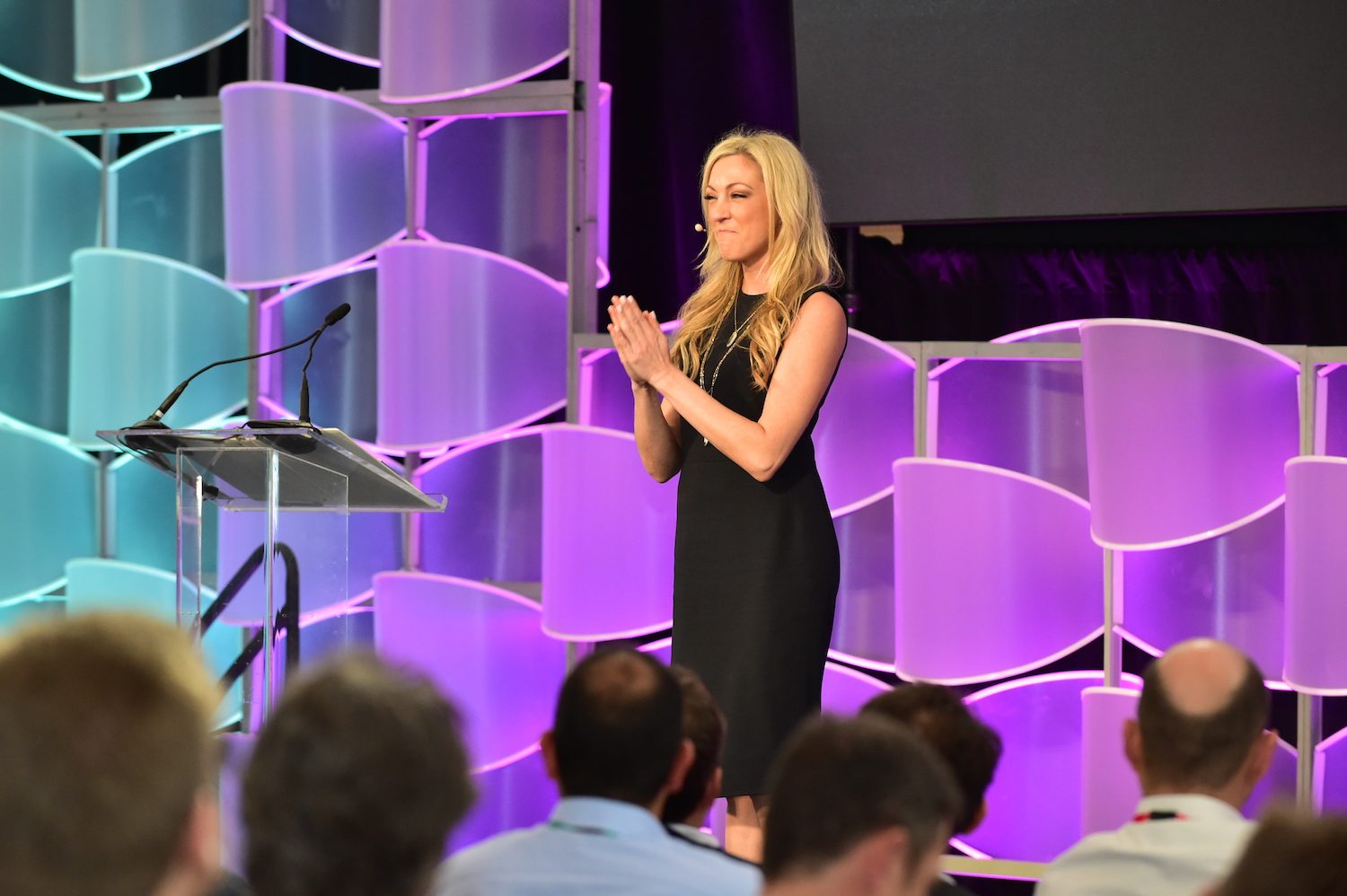
Last month, I was on CBS KCTV5 Better Kansas City TV Show for my monthly TV segment. These segments explore a variety of topics that align with my keynotes. From emotional intelligence and leadership to this month’s topic: getting started in the workforce or advancing your career after a break.

Advancing Your Career After a Break

Taking a break doesn’t stall your career—it can sharpen your focus and fuel growth. Reflect on your goals, update your skills, and reconnect with your network. Present your time off as a strategic reset, showing resilience and clarity. Employers value adaptability, and a thoughtful return can position you for even greater success.

The job market can sometimes be scary. Whether you’re a new college graduate looking for a first job, a stay-at-home parent hoping to re-enter the workforce or someone scouting out a career change to a completely different field, I have four tips to help you get back into the game!

Over the years, I’ve had the honor of recruiting for and consulting with, companies large and small. I am passionate about helping students, educators and those already in corporate America establish career paths.

Do you know the #1 problem regarding applicants in today’s job market? Do you know what companies look for when hiring new employees? Do you know how to overcome the hurdle of lack of experience?

Watch my segment to learn how to overcome these obstacles and transition back to the workforce with greater ease.  After watching, let me know your favorite tip!

Advancing your career after a break

ABOUT THE AUTHOR

Shannon McKain is a motivational keynote speaker and a business consultant based in Dallas. She has worked in nearly all 50 states with audiences ranging from corporate executives to student leaders. Looking for a keynote speaker or consultant who can speak on these issues with expertise? Let’s chat!
speaker headshot